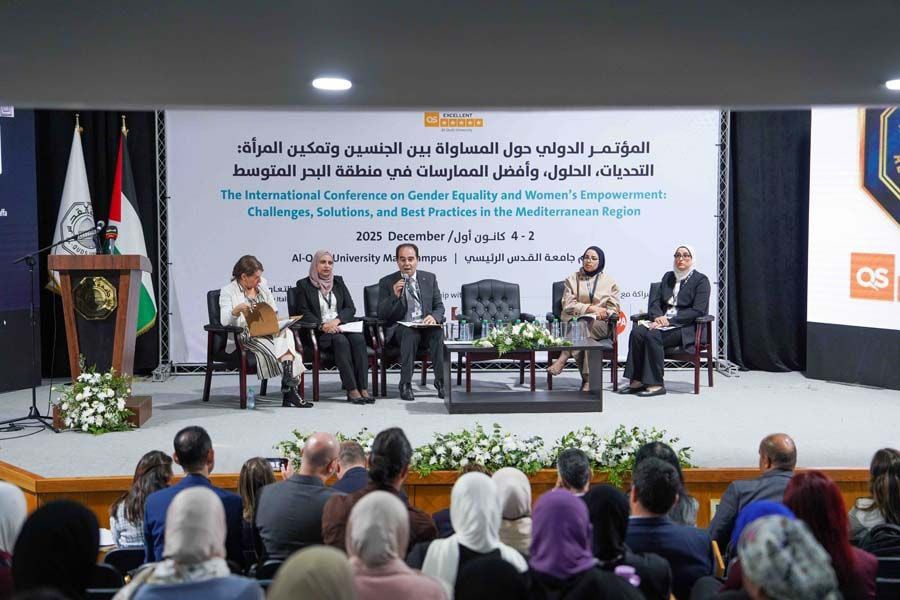
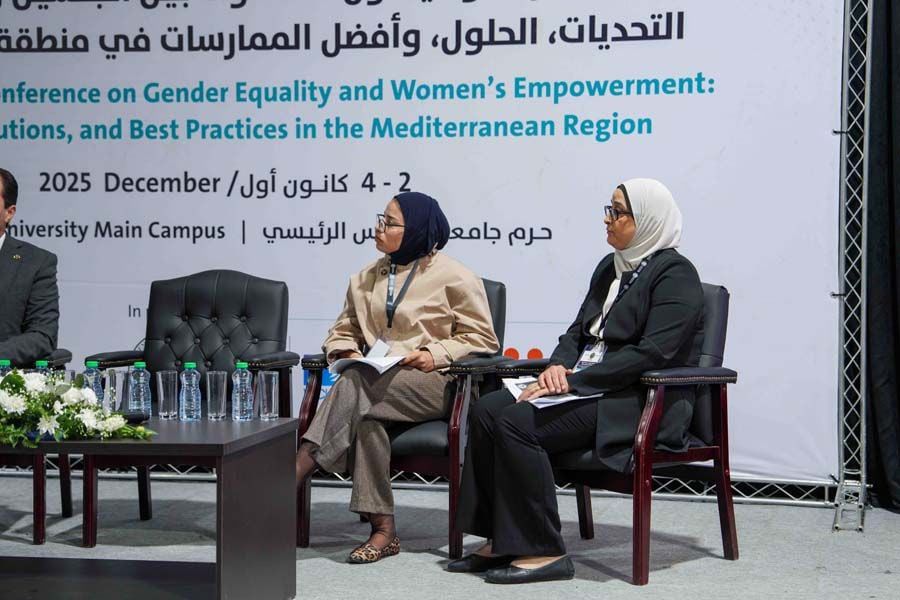
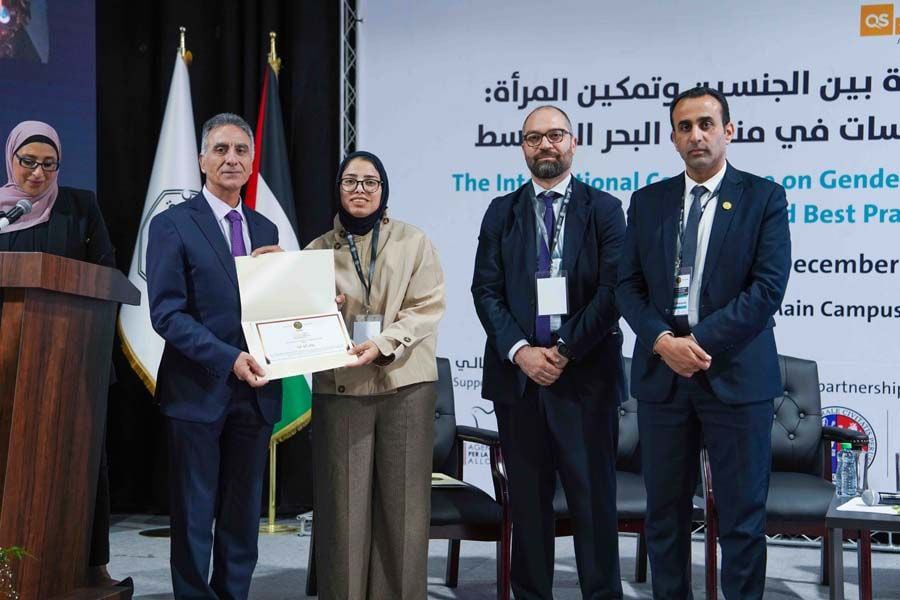
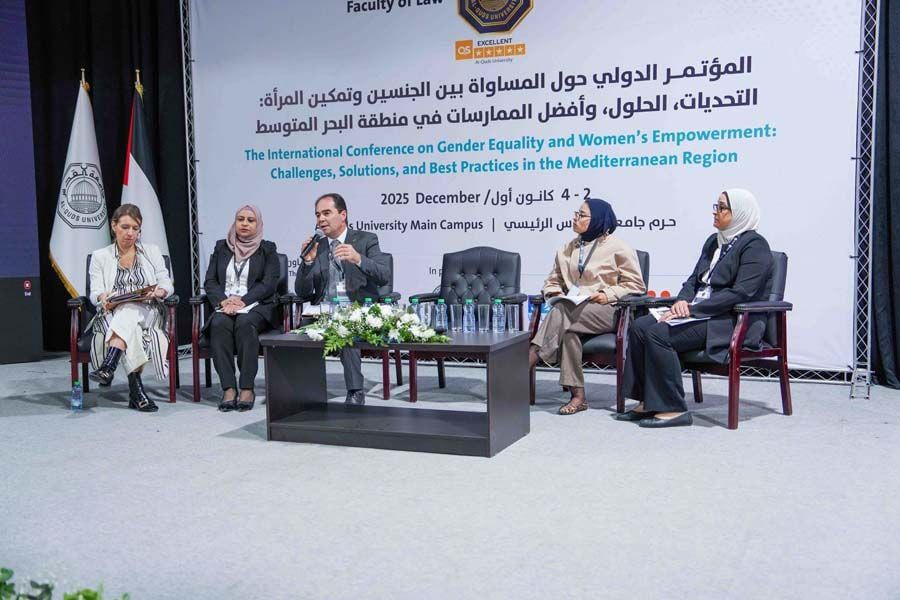
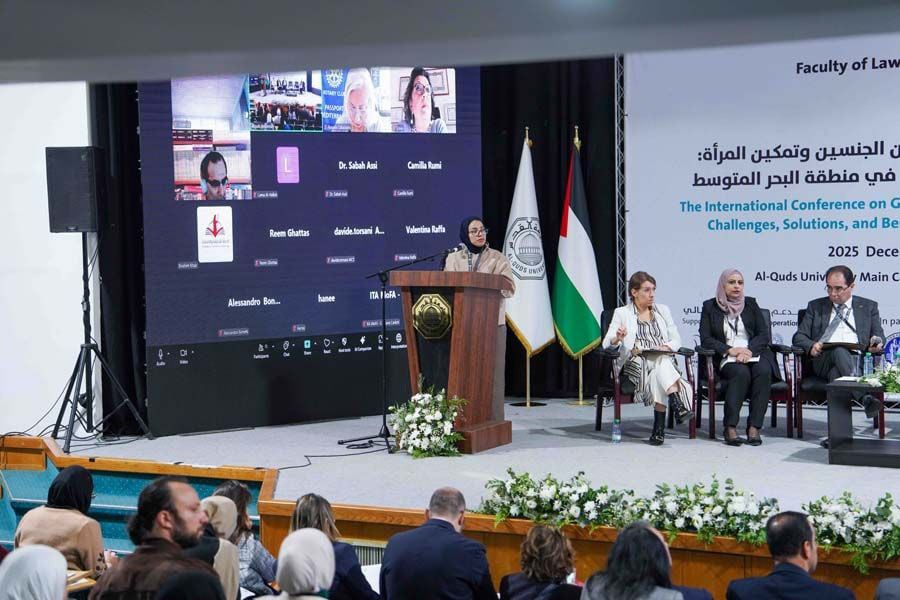
The Psychosocial Counseling Center for Women took part in the international conference on gender equality and women’s empowerment, organized by the Faculty of Law at Al-Quds University under the title: ” Gender Equality and Women’s Empowerment: Challenges, Solutions, and Best Practices in the Mediterranean Region“.
organized in collaboration with the Palestinian Ministry of Women’s Affairs, the NGO Forum to Combat Violence Against Women, the United Nations Population Fund (UNFPA), and the University of Perugia in Italy, with support from the Italian Cooperation.
During the first day of the conference, the institution’s lawyer and the legal advocacy department officer, Ms. Rawan Abu Gaza, presented a research paper titled: ” The Role of Civil Society Organizations in Contributing to the Protection of Women and Girls Survivors of Violence: The Palestinian NGO Forum to Combat Violence Against Women as a Model“.
Her presentation highlighted the role of civil society organizations in strengthening protection mechanisms for women and girls, particularly in remote and vulnerable areas that governmental institutions struggle to reach during emergencies or periods of closure imposed by the Israeli occupation.
The research paper presented at the conference highlighted several key recommendations:
- Advocating with the Council of Ministers to endorse a comprehensive Family Protection Law, and issuing a decree ensuring free medical treatment for women and girls survivors of violence, in order to establish an integrated and effective protection system.
- Establishing a clear legal framework for protection committees within civil society organizations, recognizing them as fully coordinated multidisciplinary response teams, particularly in remote and vulnerable areas that governmental institutions are unable to access during emergencies or closures. The recommendation emphasized the importance of training on protection policies, as well as the National Referral System for survivors and its recent amendments.
- Addressing violence against women and girls as a form of gender-based discrimination, ensuring equal application of legislation to all women and girls, adopting measures to confront intersecting and multiple forms of discrimination, and expediting the adoption of protective laws with strict enforcement mechanisms.
- Initiating the full implementation of the National Observatory for Monitoring Protection Services provided to survivors of violence, and ensuring its sustainability. This includes developing unified guidelines for all service-providing institutions, with a strong focus on women’s safety and the accountability of perpetrators as a shared responsibility among the police, the justice system, and social services.
- Standardizing referral and follow-up procedures across all service providers to ensure a faster and more efficient response for women and girls who have survived violence.
Revising the operational mechanisms of protection centers, from the licensing process to procedures for beneficiaries’ exit, while activating impartial monitoring tools to ensure the quality of services and transparency of operations within the centers.

 بيت لحم :
شارع القدس الخليل بجانب شركة الحلا
بيت لحم :
شارع القدس الخليل بجانب شركة الحلا